Class Zero Emission - UK
04.09.2012
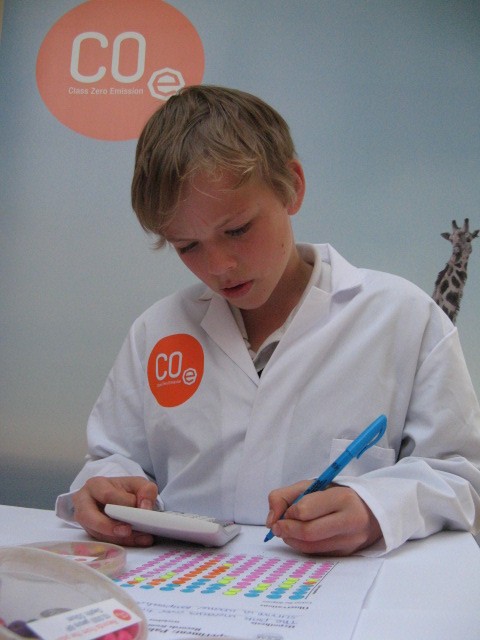
Class Zero Emission workshop
© International Polar Foundation
The International Polar Foundation (IPF) UK Class Zero Emission (CZE) mobile workshop is now running at locations around the UK.
This exciting workshop opens up the fascinating world of the Polar Regions through large interactive 3D puzzles of the Arctic and Antarctica. Hands on scientific experiments allow students to learn about the fascinating world of polar science and realise the importance of adopting a sustainable way of life.
A model of the IPF zero emission Princess Elisabeth research station serves as an example of what can be achieved even in cold and remote locations.
Look at the picture gallery to see the workshop in action.
Aims of the workshop
- Use the breathtaking world of the Polar Regions to encourage interest in scientific research;
- Increase awareness of climate change, its impacts and the science behind it;
- Investigate energy use and how to reduce emissions to zero; and
- Provide inspiration to adopt a more sustainable lifestyle
Who can take part?
The workshop is suitable for use in schools, for teacher training, families and corporate and community groups (various formats are available). The workshop is led by a trained member of staff.
Can my school / Science Centre loan the workshop?
Yes the workshop materials can be loaned and run by Science Centres, schools and other venues and will be transported by van between venues. A summary of the materials included can be downloaded here.
Training sessions are run by IPF - please get in touch to check availability.
Where can we do it?
The workshop is being made available at Science Centres, museums and at schools around the UK to give as many people as possible the opportunity to take part.
The workshop will be running at Birmingham Thinktank from 24-26th April 2015 and at At Bristol Science Centre from 30th May to 1st June 2015 in association with the Sea Ice, Shackleton and Science project.
During 2013 and 2014, the workshop was available to the public at Science Oxford, Birmingham Thinktank, Our Dynamic Earth Edinburgh, At Bristol Science Centre, Aberdeen Maritime Museum and Glasgow Science Centre. The workshop was run as part of the Ice Station Antarctica exhibition at Dundee Science Centre.
The materials were also used at a Polar Film Festival at the University of Loughborugh, the Peak Climate Change Festival, Eco Schools conferences and Fun Day and the Big Bang Festival.
The workshop has been used extensively in primary and secondary schools and also at the University of Loughborough schools open day.
If you are interested in running the workshop at your venue, please do get in touch with us.
What is it like?
Feedback:
"Thanks for an excellent set of resources. They really helped demonstrate some of the more abstract aspects of climate change processes such as Albedo etc. The students really enjoyed the activities and I think it really helped them to improve their understanding of the concepts and processed of the Arctic/polar regions. The resources fit perfectly with both our EDEXCEL A-level geography course and also the International Baccalaureate Environmental Systems and Societies course so it was excellent." Simon Holland, Bilborough College
" The resources were well organised, clear and of a high quality. Extras, such as the lab coats, lanyards and clothing made the workshop come to life for the children. It was educational and fun – I think it has inspired some potential Arctic Explorers!" Hannah Nadin, Mary Swanwick Primary School
" Class Zero Emission provided a great opportunity for families visiting Thinktank to engage with climate scientists. The drop in style of the activities as well as the variety of experiences and high quality resources provided a really valuable event for our families... Class Zero Emission was probably the most professional looking Meet the Scientist event we have ever held, with a series of very high quality resources and interactives that drew our visitors towards them. This issues discussed within the event were ones that we have historically struggled to communicate with our visitors and in fact, we have faced a certain amount of negativity and indifference. To have experienced scientists talking with families in an informed manner based in first hand experiences as well as the wealth of research adds a new depth to the engagement that we cannot possibly hope to achieve ourselves and this is where the real value lies in projects like Class Zero Emission for a Science Museum." Kenny Webster, Thinktank
"Charlotte and I had a fabulous time and we are very excited about the workshop and its potential for science development as well as maths and creative writing and art and DT and ........the list goes on. Genuinely we are very excited about being able to loan such amazing resources that you have taken such care in putting together." Head Teacher, Silverhill School.
"The experiment box was fantastic. These worked really well with the students’ curriculum in school. Sea level rise, albedo & ocean acidification were probably the favourites amongst the group. In addition, we had several professors and senior lecturers in awe of the polar puzzles. The polar clothing was also very popular, with 16 and 17 year olds eager to dress up!" and "It is a really well set up resource, with fantastic interactive experiments. The students got stuck in, followed the worksheets and were stretched beyond their normal work environment." Ella Darlington, Loughborough University
"all the staff and children were blown away by the models and we loved using them. Each time a group of children looked at them, they noticed so much, asked so many intelligent questions and found out many answers using the cards. I also liked the animal / people / trees when working with the younger children as they helped to bring the models alive for even 3 year olds." Katie Forster, Pilsley School.
“I was really impressed with the interactive models of the Arctic and Antarctic, great way to show children about the effects of climate change” Visitor to Dundee Science Centre
"The workshop was brilliant, so many fantastic resources which really make the science come to life." Ella Darlington, President UK Polar Network.
Class Zero Emission teaching resources
These workshop resources can be downloaded free:
- Climate change experiment booklet (age 15-18)
- Exercise booklet (age 10-14)
- Four multimedia animations
Contact and further information
To book the workshop, book a training session or for any other information, please contact the IPF education team at cze.uk@polarfoundation.org
Acknowledgements
We would like to thank the UK Polar Network for their support in running the workshop and the GDF Suez Foundation for financial support (see project partners).